An Uncool Evening with Cameron Crowe
The list of writers and directors who have inspired me as a storyteller are for the most part names many are familiar with:
George Lucas, Steven Spielberg, Lawrence Kasdan, Sylvester Stallone Kevin Smith, Quentin Tarantino, Richard Linklater, Jonathan Tropper, Larry McMurtry, Michael Connelly, and Cameron Crowe.
The last name there might not be as familiar as those preceding it. Outside of my friends who have a deep passion for movies, whenever I say I’m a big Cameron Crowe fan the response I often get is something like “Who’s that?”
I then describe him by his best known works, stating he’s the man who created the stories and characters of Fast Times and Ridgemont High, Jerry Maguire, and Almost Famous.That’s typically greeted with something like, “Oh, cool.”
But cool is not the proper adjective to describe Cameron Crowe. It’s better to describe him as uncool, though to me who has been a fan of his since I was 10, Cameron Crowe is pretty damn cool.


I first encountered Cameron Crowe in the last weeks of the summer of 1982 and I was soon starting the 5th grade. One Friday night, my 18-year-old cousin Jimmy took me along with his older sister Cherie and girlfriend Carol to see a movie titled Fast Times at Ridgemont High on its opening night.
I was undoubtedly the youngest person in the packed auditorium and probably younger than I should’ve been to see a movie like it. Regardless, I saw it saw it and Fast Times has had long lasting impacts on my life.
The lines spoken by Sean Penn’s Jeff Spicoli instantly stuck in my mind. I repeated them ad infinitum starting the next day (and still do). The anti-authority surfer stoner became my hero, even though I never got into surfing or drugs and only while I occasionally talked back to authority, I’m not sure I ever really challenged it.
Well, I did get a fake ID when I was 16 and wanted to buy my own beer. For a law breaking task such as this, I naturally had the name Jeffrey T. Spicoli printed on the card alongside my photograph. The T was for Tiberius because I was watching Star Trek reruns late at night during that particular summer vacation. (Two fictionalized yet accurate accounts of my using of said “Spicoli ID” happen with the character Scags in Livin’ on a Prayer that I wrote with Robert Slawsby)
The Best of Jeff Spicoli

Cameron Crowe would pop into my life again when I was working in the movie theaters during my last years high school and first years of college. Say Anything…, the first movie Cameron both wrote and directed, came out when I was working at the UA 6. We had privileges to see movies there and at the older UA 4 on freeway exit away at the Tyler Mall. I enjoyed Say Anything…, but it didn’t do much for me though it has become far more meaningful in the years since.
Singles, Cameron’s next picture, came out when I was working at the Edwards Corona 11. The Seattle music scene was coming on strong at the time. Soundgarden and Alice in Chains play shows in the movie. Eddie Vedder, Ston Gossard, and Jeff Ament of an up and coming band named Pearl Jam portrayed the film’s fictional band Citizen Dick. Again, Singles was a movie that didn’t fully resonate with me, possibly because I wasn’t into that dating scene and was just a drunk college kid. Or maybe I wanted more Fast Times at Ridgemont High.
It was Cameron’s third movie as writer-director that floored me, along with the pretty much everyone else who goes to the movies. It was Jerry Maguire, which provided Tom Cruise with one of his most memorable and serious roles. Without a doubt this was storytelling and movie making at its best. The phrase “show me the money” entered our culture through it, winning Cuba Gooding, Jr. an Oscar simultaneously.
“Show me the money!”
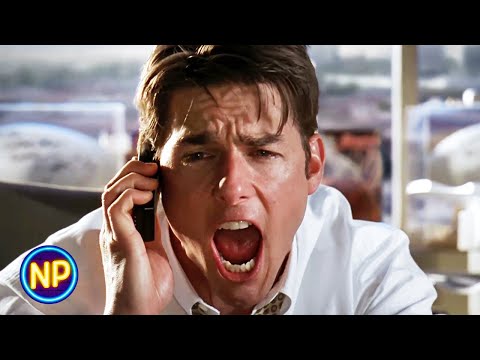
I saw it on a Sunday night in La Verne with my buddy Eric and two soccer players at Azusa Pacific University the we each had a liking for, Michelle and Lori. I remember looking over at Lori at the end of the movie and she was crying. I hoped she didn’t notice I was teary eyed too.
The wannabe movie maker in me loved that this Jerry Maguire had elicited such an emotional response in not only me. This movie stirred me greatly too. A few days later I went to a daytime showing to watch it again all by myself without distraction.
Almost Famous followed not long after and that too was a masterpiece, though much more personal as it was a fictional autobiography of Cameron Crowe. He could only make this movie because of the success of Jerry Maguire and Hollywood always bets on success. That success included Cameron winning an Academy Aware for Best Original Screenplay, and a Grammy for Best Compilation Soundtrack for a Motion Picture
His next movie was Vanilla Sky, an adaptation of the Spanish movie Abre Los Ojos. Vanilla Sky by accounts is an incredible movie yet also incredibly disturbing. I only watched it once, though I own the DVD. Somewhere around that time I stopped following Cameron’s work. I’m not sure why, but for some reason I did. The only movie of his I’ve seen since has been Elizabethtown, which I watched on Netflix about a decade ago. It too is an excellent movie and is pure Cameron Crowe.
I need to watch We Bought a Zoo and Aloha to complete my knowledge of his scripted filmography, especially after the evening of Thursday, October 30, 2025.
What happened on October 30th?
I wound up in the same room as Cameron Crowe.
Okay, now that I’ve inflated this in your mind, I’ll tell you what really happened. Cameron Crowe came to Nashville to promote his recently released memoir, The Uncool.
When I learned this was happening there was no doubt in my mind that I had to go. He’d be appearing CMA theater on October 30, 2025. The VIP meet and greet tickets were $300 and as much as I would’ve liked to have a picture with him, shake his hand, and have a brief pointless conversation, I could not justify the cost. It’s not like it was a floor seat to Guns N Roses or Garth Brooks.
I attended event alone, because like the author of the memoir who was coming to town, I’m uncool. Amongst my friends who I consider uncool enough to appreciate an evening with Cameron Crowe, none of them live Middle Tennessee, so I purchased single ticket as close to the stage as was available and not over $100 in price and went to the CMA that Thursday evening.
Those who turned out for the event were the uncool creative types I was used to seeing at screenings and Q&As with filmmakers when I lived in Southern California. Basically I was inside an intimate auditorium with several other uncool individuals. While waiting for the program to begin, we were treated to music from the 1970s playing along with a slide show of still and some videos of the acts Cameron had covered as a rock journalist: Led Zepelin, David Bowe, The Allman Brothers Band. There was a smattering of a youthful long haired Cameron Crowe photos thrown into the slide show of course.


The lights dimmed and Cameron Crowe came from behind the curtain and walked out to a waiting podium. He introduced himself and gave a preamble before reading lengthy and emotional excerpt from The Uncool about a 16 year old Cameron on the road with the Allman Brothers attempting to get highly prized interview with Gregg Allman after his brother Duane had died and a Rolling Stone article that came out at the same time magazine trashing the band.
It was fascinating to listen to Cameron read his own recollections of getting Duane Allman to warm up to him, agreeing to an interview, then having it all fall apart, and then miraculously get resurrected and becoming his first cover story for Rolling Stone. This would also become inspiration for a good portion of the pseudo biographical Almost Famous.
Cameron warned the audience that might be as he’d been overwhelmed with feelings when he’d recorded this part of the audio version of the book. Later he said that the reading that night, he finally felt that he’d been healed in the process.
With the reading complete, Cameron sat down for a discussion of his book and career moderated by Sheryl Crow. Flowing perfectly from reading to the discussion, Sheryl told Cameron she’d recently purchased the drug store in her home town that she used to go to as a kid. Along with the drug store came the old magazine rack. One of the magazines that was still with it was the issue of Rolling Stone with Cameron’s Allman Brothers cover story. He did not have a copy and Sheryl gave it to him, saying it belonged with him.


The conversation went mostly back and forth between Cameron’s time as a teenage rock journalist getting interviews with several of the biggest names of the time, and the movies he’s made starting in the1980s. Most of the movie discussion centered around Almost Famous, Say Anything… and Elizabethtown, with mentions of Jerry Maguire and Vanilla Sky. Cameron talked about working on a bio pic with Joni Mitchell, expressed his long held desire to make a movie about Marvin Gaye, and even teased a third movie collaboration with Tom Cruise.
They then opened up the discussion to questions from the audience. Two microphones were set up in the right and left aisles near the stage. Lines of the uncool formed quickly. I hesitated to get up. I wasn’t sure I had anything good to ask or add to the conversation, especially since nothing had come up about Fast Times at Ridgemont High.
I quickly said “F—k it” to myself, got up and joined the line. I was as uncool as anyone else in that room that had a question to ask. And I had a question to ask about Fast Times. As the Q& A went along, I heard everyone first give a comment about something Cameron had created that had impacted them. This would give me license to give a statement of my own before posting my question.
But why hadn’t anyone said a damn thing about Fast Times at Ridgemont High? Cameron hadn’t directed it, but he’d written the script. It had been a unique movie and was iconic amongst the teenage movies of the 1980s. Cameron going undercover as a high school student to get write the book that would become the movie was a great story on its own.
Why wasn’t Fast Times a topic tonight? Well, it soon would be.
After standing through several comments, questions, and answers, I finally found myself standing before the microphone on the right side of the auditorium. A light above came on and illuminated me. I looked directly up at at Cameron Crowe sitting up on the stage about 20 feet away next to Sheryl Crowe and told him, “In late August of 1982, I was in the Fourth Grade and my cousin took me to see Fast Times at Ridgemont High on opening night in a packed theater.”
Several people in the audience applauded and Cameron smiled. I continued.
“I also had a fake ID in high school with the name Jeff Spicoli on it.” Cameron’s smile grew bigger. “It was a terrible ID and everyone knew it was fake, but because it said Jeff Spicoli they usually sold me the beer. So on behalf of me and my friends growing up, thank you for giving us that.” Cameron had a good laugh at this and nodded his gratitude to me.
It was now time for me to get serious.
“A couple of years ago I got a copy of your book, Fast Times at Ridgemont High. I’m curious, did you stay in touch with, or do you know what became of the people who were the characters you wrote about?”


Sheryl Crow interrupted Cameron before he could answer and explained to the audience that after his rock journalist days, he had gone undercover in a Southern California High School for a year. From that he wound up writing what was first the book and then the movie Fast Times at Ridgemont High.
Cameron Crowe looked at me as he spoke into his microphone and said that the teenagers he’d written about had been very supportive of what he was doing back then and that he had indeed kept up with them over the passing years.
“They’ve all gone on to have successful lives,” he said, before adding, “Well most of them.” He divulged nothing more. I thanked him and returned to my seat.
I think I was a surprised to hear Cameron had kept up with the “Ridgemont High” alumni he’d made famous as characters of themselves, yet I was happy he did. It fit her persona. Yes, he could take a written snapshot of your life, whether you were a famous world known major rock star or an awkward teenager with serious acme, but he would also be curious of where you’d go and what you’d do later.
The event concluded with a standing ovation for Cameron Crowe from all his uncool devotees. I left with a copy of The Uncool I’d bought with a feeling a sense of sublime contentment had not felt in a long time. For two hours I’d been able to listen to a master storyteller I admire do what he does best: tell his stories. And for couple of minutes I’d been able to tell him a couple of mine related to his work, and ask a question that tied me back to the first time I’d encountered one of his stories as the youngest person in a packed theater watching one of the movies that made me want to write stories and entertain people myself.
That Thursday night in the CMA theater with Cameron Crowe was one of the coolest uncool things I’ve done in while. I can only describe the evening in the terms of the one and only Jeff Spicoli. The evening was “Awesome. Totally Awesome.”
Way to go, Cameron.

